




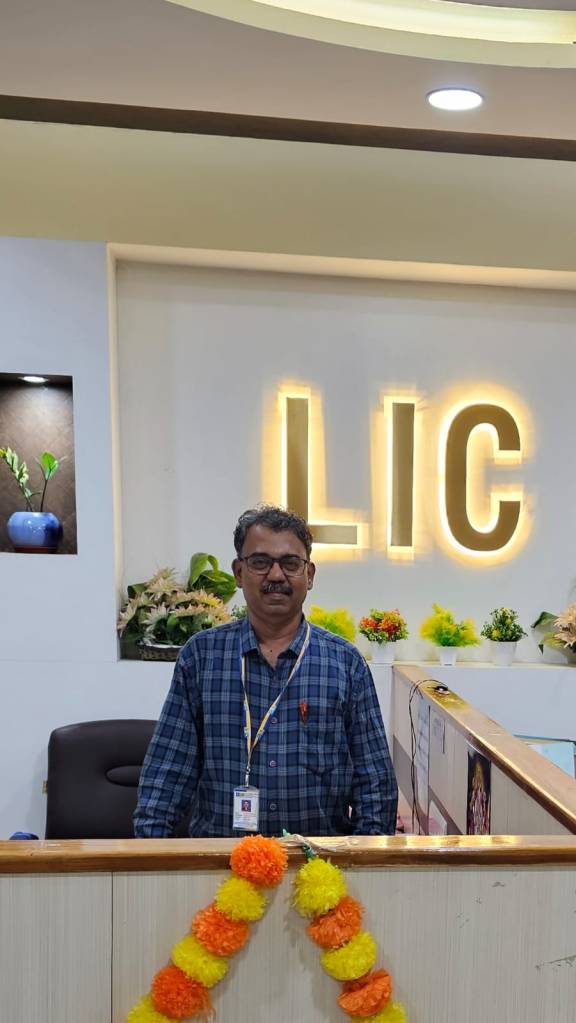




I am writing to formally introduce myself as a newly certified LIC Insurance Advisor. I successfully cleared the IRDAI examination in June 2024 with a score of 82%, and I am proud to be associated with LIC, an institution synonymous with trust, security, and service.

With over 30 years of experience in the insurance sector, having served in the National Insurance Company, I bring with me a deep understanding of insurance principles, customer service, and the importance of financial planning. My vision is to help individuals and families achieve financial stability by bringing them under the protective umbrella of LIC’s life insurance policies.

I am committed to introducing a range of LIC plans tailored to meet the unique needs of my clients — be it for family protection, savings, retirement, or children’s education. My goal is to help people secure their futures with the right guidance and trusted insurance products.

I would be grateful for an opportunity to meet and explain how LIC’s offerings can benefit your team/customers/community. Kindly feel free to contact me at your convenience.

Thank you for your time and consideration.

  • LIC Jeevan Utsav is a non-linked, participating, individual, whole-life insurance plan launched by the Life Insurance Corporation of India (LIC). It’s designed to offer life-long protection along with the option of guaranteed regular income or lump-sum benefits after the premium payment term is over.

    Here’s a breakdown of its key features:


    🔑 Key Features of LIC Jeevan Utsav (Plan No. 871):

    1. Whole Life Coverage
      Coverage continues for the entire lifetime of the policyholder after the premium payment term.
    2. Limited Premium Payment
      Premiums are paid for a fixed period (say 5–16 years), after which benefits begin.
    3. Two Benefit Options (chosen at the start): Option 1: Regular Income Benefit
      • After the premium payment term ends, the policyholder receives a guaranteed regular income every year.
      • This income is a fixed percentage (e.g., 10%) of the Basic Sum Assured.
      Option 2: Flexi Income Benefit
      • Instead of receiving the regular income yearly, the policyholder can accumulate the annual payouts with LIC and withdraw them as needed.
      • LIC gives interest on the accumulated amount.
    4. Bonus Participation
      • Since it’s a participating plan, it is eligible for Simple Reversionary Bonuses and possibly a Final Additional Bonus.
    5. Maturity Benefit
      • There’s no maturity benefit since it’s a whole-life plan.
      • However, in case of death, the Death Benefit is paid out to the nominee.
    6. Death Benefit
      • Higher of:
        • 125% of Basic Sum Assured or
        • 7 times annualized premium
        • Bonuses (as applicable)

    ✅ Other Features:

    • Loan facility after 2 years.
    • Surrender value is available after paying premiums for at least 2 years.
    • Riders like Accidental Death Benefit or Disability Benefit can be added.

    Example Scenario:

    Let’s say someone, age 35, takes a Jeevan Utsav policy with a Basic Sum Assured of ₹10 lakhs and chooses the Regular Income Option. If the premium payment term is 10 years:

    • They pay premiums for 10 years.
    • From the 11th year onward, they receive ₹1 lakh (10% of BSA) every year till death.
    • If they die at age 80, the nominee receives the Sum Assured + bonuses in addition to the yearly payouts already received.

  • LIC endowment plans are a type of life insurance policy that combines the benefits of life insurance coverage with savings.1 Here’s a breakdown:

    What LIC Endowment Plans Are:

    • Dual Benefits:
      • They provide life insurance coverage, offering financial protection to your beneficiaries in the event of your death during the policy term.2
      • They also function as a savings tool, providing a lump-sum maturity benefit if you survive the policy term.3
    • Key Features:
      • Maturity Benefit: If you survive the policy term, you receive a maturity benefit, which can help you achieve long-term financial goals.4
      • Death Benefit: If you pass away during the policy term, your beneficiaries receive a death benefit.5
      • Savings Component: A portion of your premium goes towards building a savings corpus.6
      • Potential Bonuses: Some LIC endowment plans are “participating” policies, meaning they may offer bonuses based on the company’s performance.7
      • Tax Benefits: Premiums paid may be eligible for tax deductions under Section 80C of the Income Tax Act, and maturity benefits may be tax-free under Section 10(10D).8

    Why Consider Purchasing an LIC Endowment Plan:

    • Financial Security: They provide a safety net for your family, ensuring they are financially secure in your absence.9
    • Long-Term Savings: They encourage disciplined savings, helping you build a corpus for future needs like retirement, children’s education, or marriage.10
    • Risk-Averse Investment: Endowment plans are generally considered low-risk investments, offering stability and guaranteed returns.11
    • Goal-Oriented Savings: They can help you achieve specific financial goals by providing a lump-sum payout at maturity.12
    • Tax Advantages: They offer potential tax benefits, which can help you save on taxes.13

    Important Considerations:

    • It’s crucial to carefully review the terms and conditions of any endowment plan before purchasing it.
    • Understand the policy’s maturity benefits, death benefits, and any associated bonuses.
    • Consider your financial goals and risk tolerance to determine if an endowment plan is the right fit for you.

    When considering a LIC endowment plan, it is always wise to contact LIC or a certified financial planner, to get the most up to date and accurate information.

  • LIC Term Insurance Plans are pure life insurance policies that provide financial protection to your beneficiaries in the event of your death during the policy term.1 Here’s a breakdown:

    What LIC Term Insurance Plans Are:

    • Pure Protection:
      • Term insurance plans focus solely on providing a death benefit. There is no maturity benefit or savings component.
    • Death Benefit:
      • If the policyholder dies during the policy term, the beneficiaries receive a pre-determined death benefit.
    • Affordable Premiums:
      • Term insurance plans typically have lower premiums compared to other life insurance policies like endowment or whole life plans.2
    • Specific Policy Term:
      • Coverage is provided for a specific period, such as 10, 20, or 30 years.3

    Why Consider Purchasing an LIC Term Insurance Plan:

    • Financial Protection for Loved Ones:
      • The primary reason to buy a term insurance plan is to ensure that your family is financially secure in your absence.4
    • Affordable Coverage:
      • Term insurance offers high coverage at a relatively low cost, making it accessible to a wide range of individuals.5
    • Debt Coverage:
      • It can help cover outstanding debts, such as mortgages or loans, ensuring that your family is not burdened with financial obligations.67
    • Income Replacement:
      • The death benefit can replace lost income, allowing your family to maintain their standard of living.8
    • Supporting Dependents:
      • It can provide financial support for dependents, such as children or elderly parents.9
    • Tax Benefits:
      • Premiums paid are eligible for tax deductions under Section 80C of the Income Tax Act, and the death benefit received by beneficiaries is tax-free10 under Section 10(10D).1112

    Key Considerations:

    • No Maturity Benefit:
      • It’s important to remember that term insurance plans do not provide any maturity benefit. If you survive the policy term, you will not receive any payout.13
    • Policy Term:
      • Choose a policy term that aligns with your financial goals and responsibilities.
    • Coverage Amount:
      • Calculate the appropriate coverage amount based on your income, debts, and financial obligations.
    • Health and Age:
      • Premiums are generally lower for younger and healthier individuals.14

    Term insurance is generally considered a fundamental part of a sound financial plan, especially for those with dependents.15 As always, it is wise to consult with LIC, or a qualified financial planner to get the most accurate and up to date information.

  • LIC whole life plans are a type of life insurance that provides coverage for the entirety of your life, as opposed to a term life policy that covers you for a specific period. Here’s a breakdown:

    What LIC Whole Life Plans Are:

    • Lifelong Coverage:
      • These plans offer protection for your beneficiaries throughout your lifetime, typically up to age 99 or 100.
    • Death Benefit:
      • Upon the policyholder’s death, the beneficiaries receive a death benefit, providing financial security.
    • Savings Component:
      • Some whole life plans accumulate cash value over time, which can be accessed through loans or withdrawals.
    • Potential Bonuses:
      • Many LIC whole life plans are participating policies, meaning they may offer bonuses based on the company’s performance, potentially increasing the death benefit or cash value.

    Why Consider Purchasing an LIC Whole Life Plan:

    • Estate Planning:
      • Whole life plans can be valuable for estate planning, ensuring that your heirs receive a financial inheritance.
    • Lifelong Financial Security:
      • They provide guaranteed financial protection for your loved ones, regardless of when you pass away.
    • Long-Term Financial Goals:
      • The cash value component can be used to achieve long-term financial goals, such as retirement income.
    • Tax Benefits:
      • Like other life insurance policies, whole life plans may offer tax benefits, such as tax-free death benefits for beneficiaries.
    • Financial Stability:
      • LIC is a government owned entity, that has a long history, therefore providing a sense of financial stability.

    Key Considerations:

    • Whole life insurance premiums are generally higher than term life insurance premiums.
    • It’s essential to understand the policy’s terms and conditions, including the death benefit, cash value accumulation, and any associated bonuses.
    • Consult with a financial advisor to determine if a whole life plan aligns with your financial goals and needs.

    To get the most accurate and current information, it is always best to contact LIC directly, or a qualified financial planner.

  • LIC money-back plans are a type of life insurance policy that provides periodic payouts during the policy term, along with life insurance coverage. Here’s a breakdown:

    What LIC Money-Back Plans Are:

    • Periodic Payouts:
      • These plans offer regular payouts, known as “survival benefits,” at predetermined intervals during the policy term.
      • These payouts provide a stream of income while the policy is active.
    • Death Benefit:
      • In the event of the policyholder’s death during the policy term, the beneficiaries receive a death benefit.
    • Maturity Benefit:
      • At the end of the policy term, if the policyholder survives, they receive a maturity benefit.
    • Combination of Insurance and Liquidity:
      • Money-back plans offer a blend of life insurance coverage and liquidity through periodic payouts.
    • Potential Bonuses:
      • Some LIC money-back plans are participating policies, which may offer bonuses based on the company’s performance.

    Why Consider Purchasing an LIC Money-Back Plan:

    • Regular Income:
      • The periodic payouts provide a steady stream of income, which can be used to meet various financial needs.
    • Financial Security:
      • The death benefit ensures financial protection for your family in your absence.
    • Meeting Short-Term Goals:
      • The payouts can be used to achieve short-term financial goals, such as children’s education, down payments, or travel.
    • Liquidity:
      • Money-back plans offer liquidity, as you receive payouts before the policy matures.
    • Tax Benefits:
      • Like other life insurance policies, money-back plans may offer tax benefits, such as tax-free death benefits for beneficiaries, and potential tax savings on premiums under section 80C, and maturity benefits under section 10(10D).

    Key Considerations:

    • The periodic payouts may be lower than the potential returns from other investment options.
    • It’s essential to understand the policy’s terms and conditions, including the payout schedule, death benefit, and maturity benefit.
    • It is important to understand that the total return of the policy may be lower than other investment options.
    • Consult with a financial advisor to determine if a money-back plan aligns with your financial goals and needs.

    As always, for the most accurate and up to date information, it is best to contact LIC, or a qualified financial planner.

  • LIC rider plans are essentially add-ons that you can purchase to enhance the coverage of your base LIC life insurance policy. They provide extra protection against specific risks, offering a more comprehensive safety net. Here’s a breakdown:

    What LIC Rider Plans Are:

    • Additional Coverage:
      • Riders supplement your existing life insurance policy, providing benefits beyond the basic death benefit.
    • Specific Risk Protection:
      • They cover specific risks like accidental death, disability, critical illnesses, and premium waivers.
    • Customizable Protection:
      • You can choose riders that align with your individual needs and risk factors.
    • Cost-Effective:
      • Adding riders is generally more cost-effective than purchasing separate standalone policies for each risk.

    Why Consider Purchasing an LIC Rider Plan:

    • Enhanced Financial Security:
      • Riders provide extra financial protection for you and your family in unforeseen circumstances.
    • Comprehensive Coverage:
      • They ensure that you’re covered against a wider range of risks, not just death.
    • Accidental Protection:
      • Riders like the Accidental Death and Disability Benefit Rider offer financial support in case of accidents leading to death or disability.
    • Critical Illness Coverage:
      • Critical Illness Riders provide a lump-sum payout upon diagnosis of a specified critical illness, helping to cover medical expenses.
    • Premium Waiver:
      • The Premium Waiver Benefit Rider ensures that your policy continues even if you’re unable to pay premiums due to disability or other covered events.
    • Tailored to Needs:
      • Riders allow policy holders to customize their insurance plans to fit their individual circumstances.

    Common LIC Rider Types:

    • LIC’s Accidental Death and Disability Benefit Rider:
      • Provides financial compensation in case of accidental death or disability.
    • LIC’s Accident Benefit Rider:
      • Offers extra financial compensation for death due to an accident.
    • LIC’s Premium Waiver Benefit Rider:
      • Waives future premiums if the policyholder becomes disabled.
    • LIC’s New Critical Illness Benefit Rider:
      • Provides a lump-sum payout upon diagnosis of a specified critical illness.
    • LIC’s New Term Assurance Rider:
      • Provides additional term assurance coverage.

    When considering LIC rider plans, it is important to:

    • Carefully assess your individual needs and risk factors.
    • Understand the terms and conditions of each rider.
    • Consult with an LIC advisor to determine the most suitable riders for your policy.

    I hope this information is helpful.